

Hiring more people is the most visible way to increase a company’s output, but it is also the slowest and most expensive.
The companies that grow most efficiently are not the ones with the most headcount; they are the ones that have built operational systems capable of producing more output from the same number of people.
That means eliminating the manual work that consumes skilled employees’ time, giving every team member access to the information they need without asking for it, and making sure that decisions, approvals, and projects move forward on their own momentum rather than stalling on a single person’s availability.
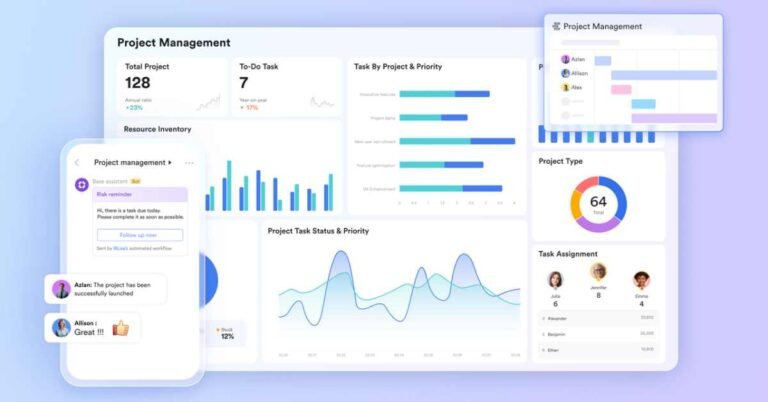
It starts with choosing the right project management tools and building every workflow around them.
Making documents work as a real operational layer with Lark Docs
Most companies treat documents as a record-keeping tool rather than an operational one. A brief gets written, shared, commented on, and eventually archived.
The work it was meant to drive gets done through a completely separate set of tools, tasks in one app, communications in another, decisions in a third.
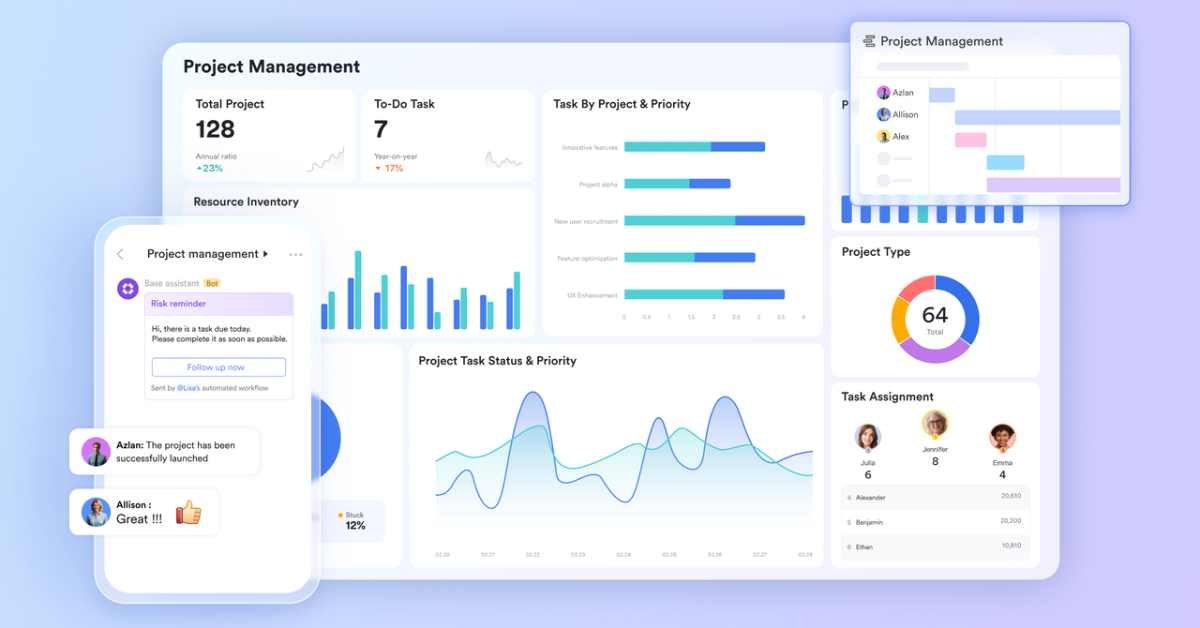
Lark Docs changes the relationship between documents and work by making the document itself an active part of the workflow.
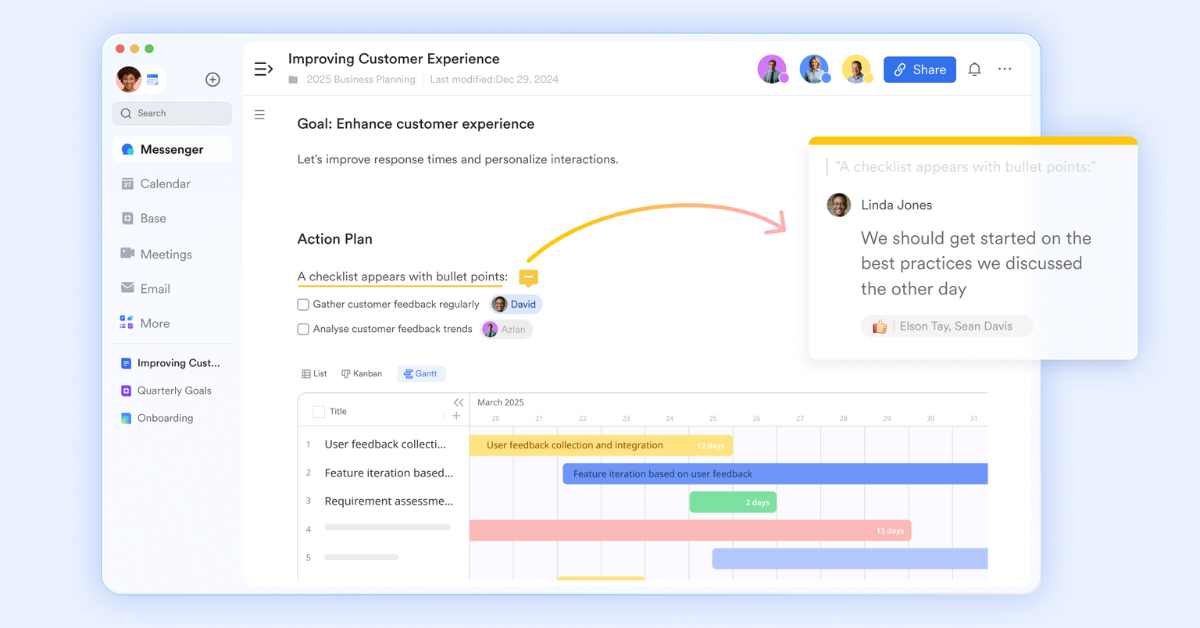
- “@mention” to route work directly from the document. Team members can mention a colleague within a doc to assign them a specific action, flag a question, or request a review. The mentioned person receives a notification immediately and can respond without the document author having to send a separate message in another tool.
- Live co-editing visible across up to 200 contributors. When a document requires input from multiple departments, a go-to-market plan, a product spec, a quarterly review, every stakeholder can contribute simultaneously with their cursor visible to all other active editors. There is no waiting for a file to come back from one person before the next can add their section.
The result- Documents become a place where work originates and gets assigned, not just where work gets recorded after the fact.
The volume of “just following up” messages drops significantly when accountability is built into the document itself.
You May also Like:- Best Gpl Sites For Plugins and Themes
Giving the financial and operational teams a single source of data with Lark Sheets
Operational decisions that depend on numbers are only as good as the quality and timeliness of those numbers.
When the data lives in disconnected spreadsheets that are updated manually and emailed to different stakeholders at different intervals, the numbers in circulation are never fully current and never fully trusted.
Lark Sheets gives every team member access to the same live dataset simultaneously, removing the version problem at its source.
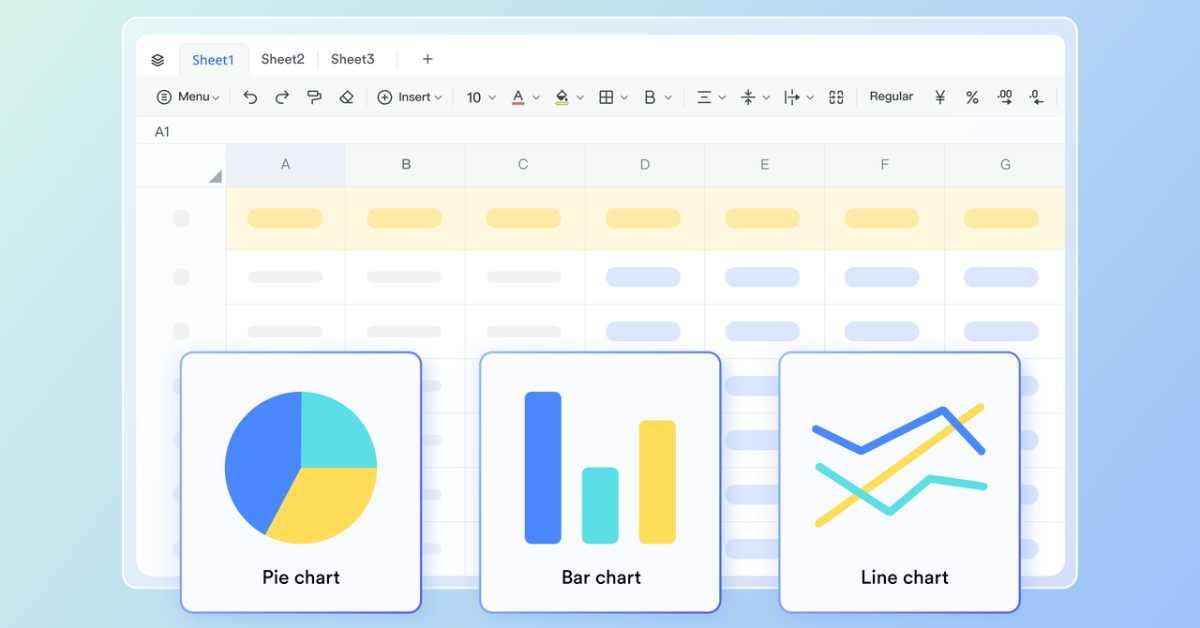
- Named ranges and cross-sheet formula references. Teams can build master data sheets that feed multiple calculation sheets through referenced formulas, so that updating a single source figure- a headcount number, a unit cost, an exchange rate- cascades through every dependent calculation automatically without requiring manual updates across multiple files.
- Granular sharing controls for sensitive data. Lark Sheets allows administrators to share specific ranges or tabs of a spreadsheet with different people, so a finance team can give a department head visibility into their own budget data without exposing company-wide financial details. Sensitivity is managed at the data level rather than through separate files.
The result- The finance team stops spending time producing different versions of the same report for different audiences. Department heads get a live view of their own numbers.
And the operational decisions that depend on those numbers get made faster because the data is never in question.
Making every meeting count from start to finish with Lark Meetings
The gap between a productive meeting and an unproductive one is rarely about the content. It is about the preparation before and the follow-through after.
When teams arrive at a meeting without shared context, the first third of the call is spent getting everyone to the same starting point.
When the meeting ends without a clear action capture, the outcomes dissolve before anyone can act on them. Lark Meetings is built to solve both ends of that problem simultaneously.

- Pre-meeting document sharing through “Meeting Groups.” When a calendar event is created in Lark, a corresponding group chat is automatically generated for all attendees. The meeting organizer can share the agenda, pre-read documents, and relevant Base records directly into that group before the call, so every participant arrives fully prepared and the meeting can skip the briefing and move straight to the decision.
- In-meeting co-annotation on shared screens. Participants can annotate a shared screen in real time during the call, marking up diagrams, highlighting data points, or suggesting edits to a document while the discussion is live. The visual layer of the conversation is preserved alongside the verbal one without requiring a separate whiteboarding tool.
The result- Meetings start from a shared baseline instead of spending the first ten minutes reaching one, and the outcomes of the discussion are captured and visible to all participants by the time the call ends.
Replacing the perpetual planning calendar with Lark Calendar
Operational scale creates a calendar problem that individual scheduling apps were not designed to solve. Projects have milestone dates. Departments have recurring reviews.
The company has all-hands events and release windows. When all of those exist in separate calendars that don’t interact, the coordination overhead of keeping everyone aware of what is happening when becomes a full-time job.
Lark Calendar gives teams a shared visibility layer that keeps the entire schedule coherent without manual maintenance.
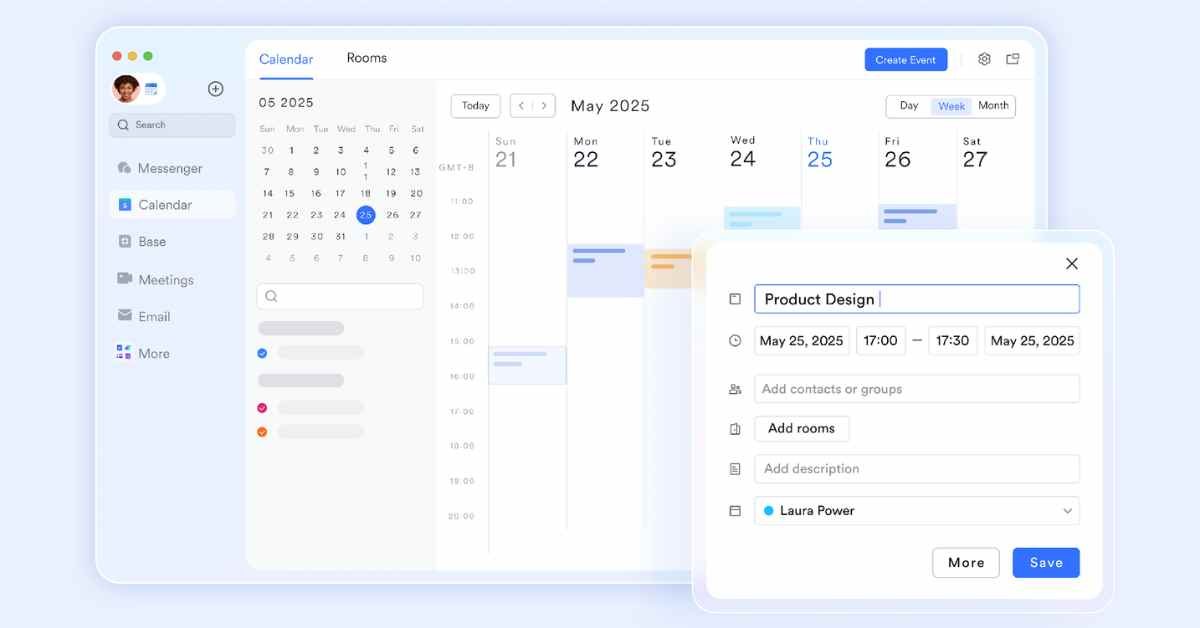
- “Calendar Subscription” for team-wide event visibility. Any team member can subscribe to a public calendar- a product release calendar, a marketing campaign schedule, or a departmental sprint board- and see all of its events automatically reflected on their personal calendar. When a launch date shifts, it shifts for everyone who has subscribed, without anyone having to send update notifications.
- Time zone display for distributed scheduling. When scheduling across geographies, Lark Calendar displays each participant’s local time alongside the proposed meeting time, removing the risk of scheduling errors and the cognitive load of mental time-zone conversion that slows down global team coordination.
The result- The operations team stops spending time on calendar maintenance and conflict resolution.
Everyone sees the same schedule, every shift is reflected automatically, and the cognitive load of staying aware of what is happening across the organization drops to near zero.
You May also Like:- WorldPressIT Review- GPL Plugins and Themes for WordPress
Surfacing the intelligence locked inside recorded meetings with Lark Minutes
Every recorded meeting contains decisions, commitments, and context that the organization needs.
But recording a meeting only creates value if someone actually extracts that value, and in most organizations, watching back recordings doesn’t happen.
The decision made at 11:14 in a meeting from three weeks ago is lost unless someone thought to write it down.
Lark Minutes turns every recorded meeting into a searchable, actionable knowledge asset without requiring anyone to take notes or review the footage manually.
- “Smart Transcript” with speaker identification. Lark Minutes automatically generates a full written transcript of every recorded meeting, with each segment attributed to the speaker who said it. Instead of hunting through a recording for who agreed to what, a team member can search the transcript for a name or keyword and jump to the exact moment in seconds.
- “AI-Generated Action Items” extracted automatically. After a meeting ends, Lark Minutes surfaces the action items that were mentioned during the discussion, tagged to the people they were assigned to. Teams don’t have to rely on one person’s notes or memory to capture what was committed to. The commitments are identified and presented automatically.
The result- Every meeting produces a retrievable record of what was discussed, what was decided, and who committed to what. The institutional knowledge that used to evaporate between sessions becomes a permanent, searchable layer of the organization’s operational memory.
Setting direction that guides work without requiring constant oversight with Lark OKR
Operational scale creates a management overhead that catches many companies off guard.
The more people an organisation employs, the more time leaders spend aligning, redirecting, and course-correcting, not because their people are incompetent, but because the connection between individual work and company direction is not visible enough for people to self-correct without input.
Lark OKR makes that connection permanent, reducing the management overhead required to keep a large team pointed in the right direction.
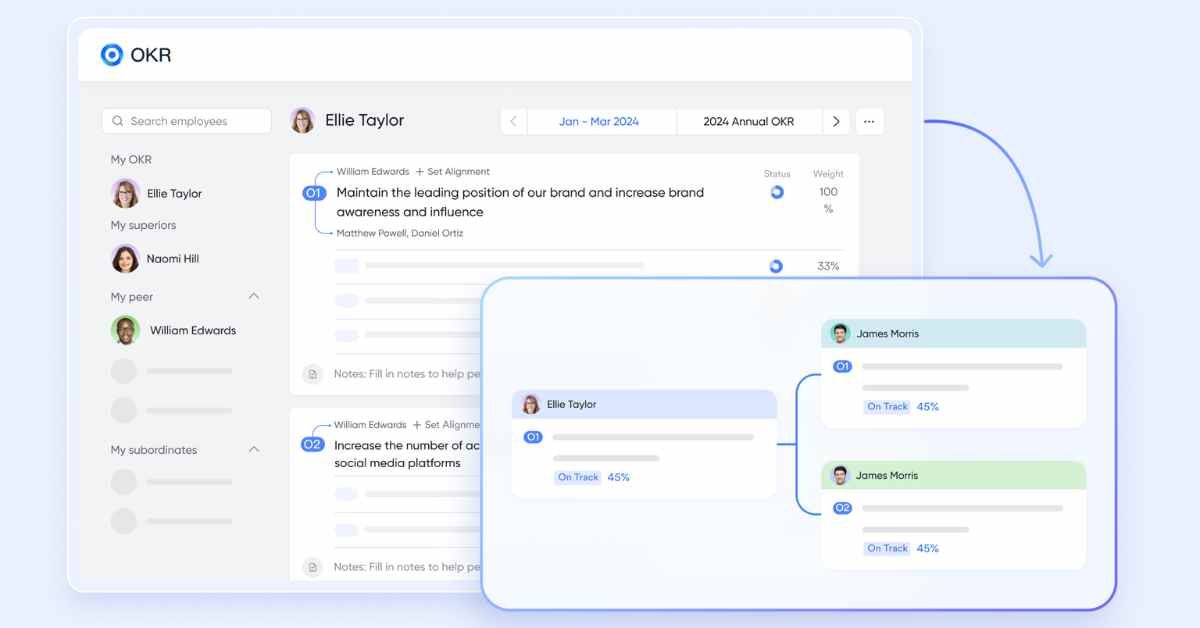
- Company-wide objective visibility for every team member. Every employee can see the company’s top-level objectives and how the department they belong to is contributing to them. When an individual contributor can see that their department is behind on a key result that feeds into a company priority, they have the context to make their own decisions about where to focus without needing a manager to explain the strategic landscape.
- Direct linking of key results to Base records and task data. Key results can be connected to live operational data in Lark Base, so that when a project milestone is completed or a sales record is updated, the relevant key result reflects the change automatically. The gap between operational progress and strategic reporting closes because they are connected at the data level, not just described in a weekly update.
The result- Leaders spend less time answering “is this the right priority?” questions because every team member already has the context to answer that question themselves.
Alignment becomes a feature of the system rather than a recurring management task.
You May also Like:- Top 10 Group Buy SEO Tools Providers list
Bonus: The compounding cost of hiring to solve an operational problem
When teams feel slow or misaligned, the reflexive response in high-growth companies is to add headcount. Hire a project manager to chase approvals.
Hire a data analyst to produce the reports the team needs. Hire an executive assistant to manage the calendar coordination that eats up the leadership team’s time.
Each hire solves a symptom, but the underlying problem, a fragmented operational system that requires human labor to run, remains.
Looking at Google Workspace pricing and similar foundational platforms alongside the stack of additional tools needed to make them functional reveals a pattern- the per-seat cost is manageable, but the operational overhead required to bridge the gaps between tools keeps growing.
That overhead eventually requires dedicated staff to manage, staff whose time could be spent on work that actually generates value.
Lark consolidates the tools that generate that overhead into a single environment. The approvals run themselves. The meeting transcripts capture themselves.
The data updates itself. The calendar coordinates itself. The operational bandwidth that was going to managing the tool stack comes back to the team as capacity for real work.
Conclusion
Building an operational system that scales is not about finding the perfect tool for each individual function.
It is about finding a platform where all the functions work together, so that the system compounds as the team grows rather than fragmenting.
When documents connect to tasks, tasks connect to approvals, approvals connect to data, and data connects to strategy, the organization gains a velocity that headcount alone cannot create.
Investing in a unified set of productivity tools early is not a cost centre decision. It is one of the highest-return investments a scaling company can make.
